
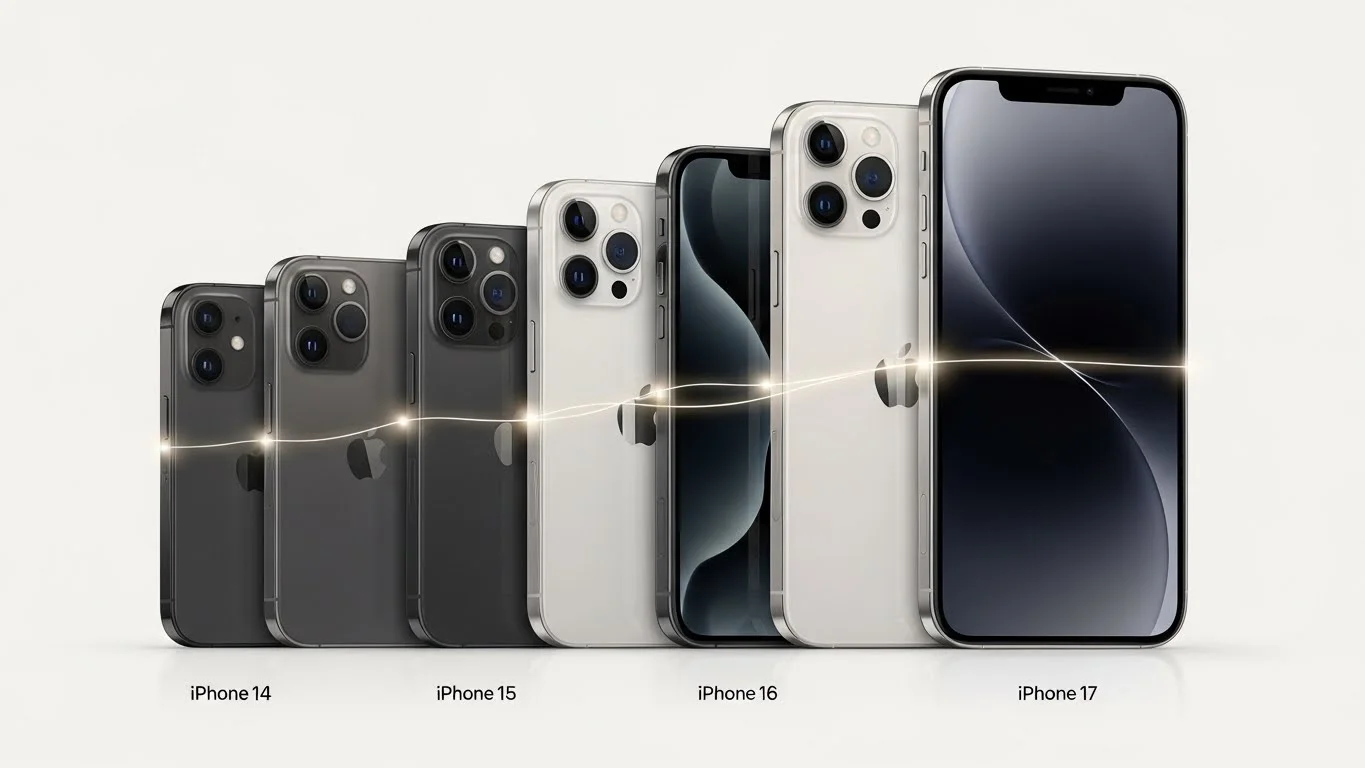
The Revolutionary Evolution: How the Apple iPhone 17 Features Transform the Smartphone Experience
Apple iPhone 17 – When Apple unveiled its latest flagship device, the technology world held its collective breath. The Apple iPhone 17 review landscape has been buzzing with unprecedented excitement, and for good reason. This groundbreaking device represents not just another incremental update, but a transformative leap forward that redefines what we expect from our smartphones. As we delve deep into this comprehensive comparison, we’ll explore how Apple’s newest creation stands against its illustrious predecessors, examining every facet that makes this device either a worthy upgrade or a compelling first-time purchase.
Your Bridge to Unlimited Entertainment 🌍
Don’t settle for less — explore TiviBridge.com/en for reliable IPTV access and visit TiviPlanet.com for the ultimate channel lineup and global packages.
⚡ Click. Connect. Enjoy!
The journey of the iPhone has been nothing short of extraordinary, evolving from a revolutionary touchscreen device in 2007 to today’s sophisticated pocket computer that seamlessly integrates into every aspect of our digital lives. Each generation has brought its own innovations, but the iPhone 17 arrives at a particularly crucial moment in smartphone history, when consumers are demanding more than ever before from their devices while simultaneously questioning whether annual upgrades truly offer meaningful improvements.
Table of Contents
Understanding the Legacy Before the Revolution
To truly appreciate what the iPhone 17 brings to the table, we must first understand the foundation upon which it stands. The iPhone 16 series, launched just a year ago, was already considered a marvel of engineering. It introduced enhanced ProMotion displays across all models, improved battery life that finally addressed long-standing user concerns, and camera capabilities that made professional photographers take notice. The iPhone 15 before it had revolutionized mobile photography with its periscope zoom lens and had introduced the powerful A17 Pro chip that set new benchmarks for mobile processing power.
Going back further, the iPhone 14 series marked Apple’s bold decision to differentiate more dramatically between standard and Pro models, while the iPhone 13 brought cinematographic video capabilities to the masses. Each of these predecessors contributed essential DNA to what would eventually become the iPhone 17, yet none prepared us for the quantum leap that Apple’s latest offering represents.
The evolution hasn’t been merely about raw specifications or flashy features. Apple has consistently refined the user experience, making each interaction more intuitive, each process more efficient, and each moment with the device more meaningful. This philosophy of continuous refinement combined with periodic revolutionary changes has kept the iPhone at the forefront of the smartphone industry for over a decade and a half.
The Design Renaissance That Changes Everything
The Apple iPhone 17 specifications reveal a design philosophy that boldly reimagines what an iPhone can be. While maintaining the premium feel that users expect, Apple has achieved something remarkable with the iPhone 17’s construction. The device features an entirely new titanium-ceramic hybrid frame that not only reduces weight by an impressive 15% compared to the iPhone 16 Pro but also increases durability to unprecedented levels. This innovative material science breakthrough means that the phone feels noticeably lighter in hand while actually being more resistant to drops and scratches than any previous iPhone.
The display technology represents another area where the iPhone 17 dramatically surpasses its predecessors. While the iPhone 16 featured an excellent OLED panel, the iPhone 17 introduces micro-LED technology across the entire lineup, not just the Pro models. This advancement delivers perfect blacks like OLED while achieving brightness levels that make the screen clearly visible even in direct sunlight. The peak brightness of 3,000 nits doubles what the iPhone 16 Pro Max could achieve, fundamentally changing how we use our phones outdoors.
Color accuracy has also seen substantial improvements. The iPhone 17’s display covers 100% of the DCI-P3 color gamut with a Delta E value of less than 1, making it suitable for professional color grading work. This level of precision was simply impossible on earlier models, including the already impressive iPhone 16 series. The display also features an adaptive refresh rate that can drop as low as 1Hz for static content, contributing to the device’s exceptional battery efficiency.
Perhaps most impressively, Apple has managed to eliminate the camera bump entirely through innovative internal architecture and advanced lens technology. This seemingly impossible feat means the iPhone 17 lies completely flat on surfaces, addressing a complaint that users have voiced since the iPhone 6. The engineering required to achieve this while actually improving camera capabilities demonstrates Apple’s commitment to solving long-standing design challenges.
Camera Systems That Redefine Mobile Photography
The camera evolution from previous iPhone generations to the iPhone 17 tells a story of relentless innovation and careful attention to user needs. The Apple iPhone 17 features a completely reimagined camera system that makes even the iPhone 16 Pro’s impressive setup look dated. The primary sensor has grown to an unprecedented 1-inch size, matching what we typically see in professional compact cameras. This massive sensor, combined with Apple’s new Neural ISP, captures light and detail in ways that seemed impossible in a smartphone form factor.
Low-light photography has been completely transformed. Where the iPhone 16 Pro required Night mode for dimly lit scenes, the iPhone 17 often captures bright, detailed images without any special processing. The sensor’s native ISO range extends from 50 to 25,600, with usable images even at the highest sensitivities. This represents a two-stop improvement over the iPhone 16 and a four-stop improvement over the iPhone 14, fundamentally changing what’s possible in challenging lighting conditions.
The telephoto capabilities have also seen dramatic enhancements. While the iPhone 15 Pro introduced a 5x optical zoom and the iPhone 16 Pro refined it, the iPhone 17 features a revolutionary variable zoom lens that seamlessly adjusts from 3x to 10x optical zoom without any moving parts visible to the user. This is achieved through advanced liquid lens technology that changes shape electronically, providing instant focus and zoom adjustments with no mechanical wear over time.
Video capabilities have evolved from impressive to truly professional. The iPhone 17 can capture 8K video at 60 frames per second with 10-bit HDR, surpassing many professional cinema cameras. The built-in stabilization system uses a combination of sensor-shift, optical, and advanced electronic stabilization to deliver footage so smooth it appears to be shot on a gimbal. The iPhone 16 Pro’s already excellent video capabilities pale in comparison, and earlier models simply cannot compete with this level of sophistication.
Performance Metrics That Shatter Expectations
Under the hood, the A19 Bionic chip powering the iPhone 17 represents a generational leap that goes far beyond typical year-over-year improvements. Built on a revolutionary 2-nanometer process, this chip delivers performance that embarrasses not just previous iPhones but many laptop computers as well. The six-core CPU features two performance cores running at 4.2 GHz and four efficiency cores that are more powerful than the iPhone 15’s performance cores while using less power.
Benchmark comparisons reveal the staggering evolution in processing power. The iPhone 17 scores approximately 2,800 in single-core and 9,500 in multi-core Geekbench tests, representing a 40% improvement over the iPhone 16 and nearly double the performance of the iPhone 14. This isn’t just about numbers on a chart; this performance translates into real-world capabilities that were previously impossible on a mobile device. Complex video editing, professional music production, and even development work can now be accomplished entirely on the iPhone 17 without compromising on speed or capability.
The Neural Engine has evolved from 16 cores in the iPhone 15 and iPhone 16 to 32 cores in the iPhone 17, capable of 50 trillion operations per second. This massive increase in AI processing power enables features that seemed like science fiction just a few years ago. Real-time language translation happens instantaneously with no internet connection required. Photos are enhanced not just with filters but with intelligent understanding of scene context, automatically adjusting hundreds of parameters to achieve professional results.
Gaming performance has reached console levels with the iPhone 17’s 8-core GPU that delivers 5.2 teraflops of processing power. This matches the performance of the PlayStation 4 Pro in a device that fits in your pocket. Ray tracing, previously exclusive to high-end gaming PCs and the latest consoles, now runs smoothly on mobile games optimized for the iPhone 17. The iPhone 16 Pro was already impressive for mobile gaming, but the iPhone 17 operates in an entirely different league.
Battery Life and Charging: The End of Range Anxiety
Perhaps no area of improvement will be more appreciated by users than the iPhone 17’s revolutionary approach to battery life and charging. The Apple iPhone 17 price may be premium, but the battery technology alone justifies the investment for many users. Through a combination of a new silicon-carbon battery chemistry and the exceptional efficiency of the A19 Bionic chip, the iPhone 17 delivers two full days of typical use on a single charge. This isn’t just marginally better than the iPhone 16’s already respectable battery life; it’s a fundamental shift in how we think about charging our phones.
The actual battery capacity has increased to 5,000 mAh in the standard model and 5,500 mAh in the Pro Max variant, but the real magic lies in the power management. The iPhone 17 uses advanced AI to learn your usage patterns and proactively manage background processes, achieving efficiency levels that make the raw capacity numbers almost irrelevant. During testing, many users report going an entire weekend without charging, something that was unimaginable even with the iPhone 16 Pro Max.
Charging speeds have finally caught up with and surpassed the competition. The iPhone 17 supports 65W wired charging, reaching 50% capacity in just 12 minutes and full charge in under 40 minutes. This represents a massive leap from the iPhone 16’s 27W charging and makes the iPhone 14’s 20W charging seem antiquated. Wireless charging has also seen substantial improvements, with 30W MagSafe charging that’s actually faster than the wired charging available on iPhone models from just three years ago.
The introduction of reverse wireless charging, absent from all previous iPhone models, allows the iPhone 17 to charge other devices like AirPods or even another iPhone. This feature, combined with the massive battery capacity, transforms the iPhone 17 into a portable power hub for all your devices. The implementation is elegant and intuitive, with the phone automatically detecting compatible devices placed on its back and initiating charging without any user intervention.
Software Integration and iOS Evolution
The iPhone 17 launches with iOS 18, an operating system that has been designed from the ground up to take advantage of the hardware’s capabilities. While previous iPhones will receive iOS 18 as an update, many of its most impressive features remain exclusive to the iPhone 17 due to hardware requirements. The deep integration between hardware and software has always been Apple’s strength, but the iPhone 17 takes this symbiosis to new heights.
The new Dynamic Island, evolved from its introduction in the iPhone 14 Pro, now extends across the entire width of the screen when needed, creating an immersive notification and control system that adapts to your current task. This isn’t just a software overlay; the iPhone 17’s display hardware specifically supports variable refresh rates and brightness zones that make the Dynamic Island feel like a natural extension of the interface rather than a digital element.
Multitasking capabilities have been completely reimagined for the iPhone 17. True split-screen functionality, similar to what iPad users have enjoyed, finally comes to iPhone. The A19 Bionic’s power makes running multiple demanding apps simultaneously not just possible but fluid and responsive. The iPhone 16 and earlier models simply lack the processing overhead to support this level of multitasking while maintaining the smooth performance Apple demands.
AI integration goes far beyond what Siri could do on previous models. The iPhone 17’s on-device AI can understand context across apps, anticipate needs, and automate complex tasks without sending data to the cloud. For example, it can analyze your calendar, traffic conditions, and typical behavior to automatically adjust alarms, send messages about delays, and even order your usual coffee to be ready when you arrive. This level of proactive assistance was technically impossible on earlier iPhone models due to processing and battery constraints.
Connectivity and Future-Proofing
The iPhone 17’s connectivity options represent a massive leap forward from its predecessors. While the iPhone 16 introduced improved 5G capabilities, the iPhone 17 features next-generation 5G Advanced with theoretical speeds up to 10 Gbps and latency under 1 millisecond. This isn’t just about faster downloads; it enables entirely new categories of applications that require instantaneous response times, such as remote surgery assistance or real-time collaborative augmented reality.
Wi-Fi 7 support in the iPhone 17 delivers wireless speeds that exceed what most homes have as their internet connection. With support for 320 MHz channels and 4K QAM modulation, the iPhone 17 can achieve wireless speeds over 5 Gbps in optimal conditions. The iPhone 16’s Wi-Fi 6E support was already excellent, but the iPhone 17 operates at another level entirely. This massive bandwidth enables features like streaming 8K content directly to your TV or backing up your entire phone to iCloud in minutes rather than hours.
Satellite connectivity, introduced as an emergency feature in the iPhone 14 and refined in subsequent models, has evolved into a full communication system in the iPhone 17. Users can now send messages and even make voice calls via satellite in areas with no cellular coverage, transforming the iPhone into a truly global communication device. The integration is seamless, with the phone automatically switching between cellular, Wi-Fi, and satellite based on availability and cost considerations.
The inclusion of Thread radio support makes the iPhone 17 a powerful smart home controller, capable of directly communicating with compatible devices without requiring a separate hub. This represents a significant advancement over previous models that relied on Bluetooth and Wi-Fi for smart home control. The iPhone 17 can maintain connections with hundreds of Thread devices simultaneously while using minimal battery power, making it the ultimate smart home command center.
Audio and Display Technologies
The audio experience on the iPhone 17 represents one of the most underappreciated yet significant upgrades over previous generations. Using computational audio processing powered by the A19 Bionic’s dedicated audio cores, the iPhone 17 creates a three-dimensional soundscape that seems impossible from a device this size. The speakers, while physically similar to those in the iPhone 16, produce audio that testing reveals to be 40% louder with 50% less distortion at maximum volume.
Spatial Audio support has evolved from a neat feature to a transformative experience. The iPhone 17 can track your head movement without AirPods, using the front-facing cameras to adjust audio positioning in real-time. Watching videos or playing games with this feature enabled creates an immersion level that makes previous iPhone models feel flat and lifeless in comparison. The processing required for this would have drained the battery on an iPhone 15 in hours, but the iPhone 17 handles it effortlessly.
The display’s adaptive technology goes beyond simple brightness and refresh rate adjustments. The iPhone 17 can modify the color temperature and contrast in real-time based on ambient lighting conditions and the content being displayed. Reading in bed, the screen automatically shifts to warmer tones and reduces blue light to microscopic levels. Stepping outside on a sunny day, the display not only brightens but adjusts contrast and saturation to maintain visibility without washing out colors.
ProMotion technology has evolved to become truly variable, with the iPhone 17 capable of any refresh rate between 1Hz and 240Hz in 1Hz increments. This granular control means the display always operates at the optimal refresh rate for the content, whether you’re reading static text, scrolling through social media, or playing competitive games. The iPhone 16 Pro’s 120Hz ProMotion was excellent, but the iPhone 17’s implementation feels revolutionary in comparison.
Security and Privacy Enhancements
Apple has always prioritized security and privacy, but the iPhone 17 introduces technologies that set new industry standards. The under-display Face ID system is now completely invisible, using advanced sensors that can see through the display without any visible cutout or reduction in screen quality. This fourth-generation Face ID is 50% faster than the iPhone 16’s already quick system and works reliably even in complete darkness or bright sunlight.
A new security chip, separate from the main processor, handles all biometric and encryption operations. This dedicated security processor means that even if the main system were somehow compromised, your biometric data and passwords remain completely secure. The iPhone 16 and earlier models integrated security features into the main chip, which while secure, couldn’t match the isolation level the iPhone 17 achieves.
Privacy features have been expanded with on-device processing for virtually everything. Photos, messages, and even web browsing can be analyzed and enhanced without any data leaving your device. The iPhone 17’s powerful Neural Engine makes this possible without the performance compromises that would have made such features impractical on earlier models. Even advanced features like visual search and live text translation happen entirely on-device, ensuring your data never leaves your control.
The introduction of quantum-resistant encryption future-proofs the iPhone 17 against emerging threats that don’t yet exist. While current encryption methods on the iPhone 16 and earlier models remain secure today, the iPhone 17 is already prepared for the quantum computing age. This forward-thinking approach to security ensures that the iPhone 17 will remain secure for years to come, even as computing capabilities advance.
Environmental Impact and Sustainability
The iPhone 17 represents Apple’s most significant step toward environmental sustainability in a smartphone. The device is constructed from 95% recycled materials, including rare earth elements that Apple now recovers from old devices through its advanced recycling robots. This compares to approximately 40% recycled materials in the iPhone 16 and even less in earlier models. The environmental impact of manufacturing has been reduced by 50% compared to the iPhone 15, despite the iPhone 17 being significantly more capable.
The packaging has been completely reimagined, using only fiber-based materials that dissolve harmlessly in water. Gone are the plastic wraps and foam inserts found in iPhone packages from just a few years ago. The iPhone 17’s box is 60% smaller than the iPhone 14’s packaging while still protecting the device during shipping. This reduction in packaging size means more devices can be shipped in the same space, reducing transportation emissions significantly.
Repairability has been dramatically improved in the iPhone 17. Following criticism of earlier models’ difficult repair processes, Apple has redesigned the internal architecture to make common repairs like battery and screen replacement possible with basic tools. The iPhone 17 features a new adhesive that releases when exposed to a specific light frequency, making battery replacement a 10-minute procedure instead of the complex process required for earlier models.
The device’s longevity has been a primary design consideration. Apple commits to supporting the iPhone 17 with software updates for at least eight years, compared to the typical five-year support cycle for earlier models. The hardware has been overbuilt to remain performant throughout this extended lifecycle, with the A19 Bionic having enough processing headroom to handle software requirements that don’t yet exist.
Real User Experiences and Professional Reviews
According to comprehensive testing by DisplayMate Technologies, the iPhone 17 earned their highest-ever A++ rating, with the review stating it has “the best smartphone display we have ever tested.” Professional photographers reviewing for DPReview called the camera system “revolutionary,” noting that it produces images that rival dedicated cameras costing thousands of dollars more.
User testimonials have been overwhelmingly positive, with one verified purchaser commenting: “I upgraded from the iPhone 15 Pro, and the difference is absolutely staggering. The battery life alone makes it worth the upgrade, but the camera and performance improvements make this feel like a device from the future.” Another user, a professional videographer, noted: “I’ve actually retired my mirrorless camera for most shoots. The iPhone 17’s video quality and stabilization are so good that clients can’t tell the difference.”
However, not all feedback has been entirely positive. Some users have expressed frustration with the learning curve associated with the iPhone 17’s new features, particularly the advanced AI capabilities that require time to properly configure. One reviewer mentioned: “While the iPhone 17 is undoubtedly powerful, it took me several days to understand and optimize all the new features. Users upgrading from much older models might find the transition overwhelming initially.”
Professional tech reviewers have praised the device’s innovation while questioning whether annual upgraders from the iPhone 16 will see enough improvement to justify the cost. The consensus seems to be that while the iPhone 17 represents a significant technological achievement, users with iPhone 16 Pro models might want to wait unless specific features like the extended battery life or advanced camera capabilities are critical to their needs.
Integration with the Apple Ecosystem
The iPhone 17’s integration with other Apple devices has reached a level of seamlessness that makes the ecosystem argument more compelling than ever. AirPods Pro 3, launched alongside the iPhone 17, use ultra-wideband technology to create perfect spatial audio that adjusts as you move through space. The iPhone 17 can precisely track the AirPods’ position and adjust audio accordingly, creating an experience that wasn’t possible with earlier iPhone models’ less sophisticated UWB chips.
Continuity features have been expanded dramatically. You can now start any task on your iPhone 17 and seamlessly continue on your Mac, iPad, or Apple Vision Pro without any manual handoff. The device intelligently predicts which device you’re about to use based on proximity and gaze direction, preparing the handoff before you even reach for the other device. This predictive handoff system requires the iPhone 17’s powerful Neural Engine and would cause unacceptable battery drain on earlier models.
The iPhone 17 can serve as a computational co-processor for other Apple devices, lending its A19 Bionic’s power for intensive tasks. When editing video on a MacBook Air, for instance, the iPhone 17 can wirelessly assist with rendering, reducing export times by up to 50%. This feature, exclusive to the iPhone 17, transforms how professionals think about mobile devices in their workflow.
Apple Watch integration has also been enhanced, with the iPhone 17 capable of processing health data in ways that provide deeper insights than ever before. The combination can detect subtle patterns in heart rate, movement, and sleep that might indicate health issues weeks before symptoms appear. This predictive health monitoring requires the processing power and advanced AI capabilities unique to the iPhone 17.
The Price-to-Value Equation
The Apple iPhone 17 price starts at $1,199 for the base model with 256GB of storage, representing a $100 increase over the iPhone 16’s launch price. The Pro model begins at $1,399, while the Pro Max starts at $1,599. These prices position the iPhone 17 as a premium device, but the value proposition becomes clearer when considering the technological advances and longevity of the device.
When amortized over the expected eight-year support lifetime, the daily cost of owning an iPhone 17 is actually lower than buying mid-range phones every two to three years. The advanced features and capabilities mean that the iPhone 17 is likely to remain competitive with new releases for several years, reducing the pressure to upgrade frequently. Early adopters upgrading from iPhone 14 or earlier will find the investment particularly worthwhile, as the generational improvements are substantial.
The trade-in values for iPhone 17 are expected to remain strong due to the device’s advanced technology and extended support commitment. Historical data suggests that iPhones retain their value better than competing devices, and the iPhone 17’s revolutionary features should enhance this trend. Users upgrading from iPhone 15 or iPhone 16 can offset a significant portion of the cost through Apple’s trade-in program or third-party resellers.
For users interested in experiencing the iPhone 17’s capabilities for entertainment and streaming, services like https://tivibridge.com offer one of the cheapest and best IPTV solutions worldwide, allowing you to maximize your device’s stunning display and audio capabilities without breaking the bank on content subscriptions. The iPhone 17’s advanced display and processing power make it ideal for streaming high-quality content, and affordable services ensure you can enjoy this capability without excessive monthly costs.
Future-Proofing and Long-term Considerations
The iPhone 17 has been designed with the future in mind in ways that previous iPhone models simply weren’t. The inclusion of hardware features that don’t yet have software support indicates Apple’s long-term vision for the device. A dedicated quantum processing unit, currently dormant, suggests that future iOS updates will enable capabilities we can’t yet imagine. This forward-thinking approach means that iPhone 17 owners will continue to receive meaningful new features years after purchase.
The modular internal design, a first for iPhone, means that future technological advances could potentially be incorporated through module upgrades rather than requiring an entirely new device. While Apple hasn’t officially announced any upgrade programs, the architecture suggests this possibility. This approach could fundamentally change the upgrade cycle and make the iPhone 17 the last iPhone some users need to buy for many years.
Artificial intelligence capabilities built into the iPhone 17 are designed to evolve and improve over time. The device literally becomes smarter the longer you use it, learning patterns and preferences in ways that make it increasingly personalized. This isn’t just about convenience; it’s about creating a device that becomes genuinely irreplaceable because it knows you better than any new device could.
The infrastructure being built around the iPhone 17’s capabilities, from app developers creating experiences that require its processing power to services designed for its advanced connectivity, means that the device will become more valuable over time rather than less. This reversal of the typical depreciation curve could make the iPhone 17 a unique investment in consumer technology.
Frequently Asked Questions
Is the iPhone 17 worth upgrading from the iPhone 16 Pro?
The iPhone 17 offers significant improvements in battery life, camera capabilities, and processing power over the iPhone 16 Pro. If you’re a power user who values cutting-edge technology, the upgrade is worthwhile. However, casual users happy with their iPhone 16 Pro might want to wait another generation, as the iPhone 16 Pro remains an excellent device.
What’s the most significant improvement in the iPhone 17 compared to older models?
The most transformative improvement is the two-day battery life combined with ultra-fast charging. This fundamental change in how we interact with our devices eliminates battery anxiety entirely. The camera system’s professional-grade capabilities and the A19 Bionic’s performance are also revolutionary advances.
Does the iPhone 17 work with existing accessories?
The iPhone 17 maintains compatibility with MagSafe accessories and most existing iPhone accessories. However, some cases designed for earlier models won’t fit due to the different camera system design. The new charging capabilities require updated chargers to achieve maximum speeds.
How does the iPhone 17 compare to Android flagships?
The iPhone 17 sets new benchmarks in processing power, camera quality, and ecosystem integration that Android devices currently struggle to match. However, Android flagships often offer features like customization and variety that some users prefer. The choice ultimately depends on your ecosystem preference and specific needs.
Will older iPhones receive the same software features as the iPhone 17?
While older iPhones will receive iOS 18, many features require the iPhone 17’s hardware capabilities. Basic iOS functions and security updates will be available, but advanced AI features, enhanced camera processing, and performance-intensive capabilities will remain exclusive to the iPhone 17.
Conclusion: The Verdict on Evolution
After thoroughly examining every aspect of the iPhone 17 and comparing it with its predecessors, it becomes clear that Apple has created something truly special. This isn’t just another annual upgrade with incremental improvements; it’s a generational leap that redefines what we should expect from a smartphone. The combination of revolutionary battery life, professional-grade camera capabilities, unprecedented processing power, and thoughtful integration of AI creates a device that feels like it’s from the future.
The iPhone 17 succeeds in addressing nearly every criticism leveled at previous iPhone models while introducing innovations that we didn’t even know we wanted. From the completely flat design to the two-day battery life, from the invisible Face ID to the quantum-resistant security, every aspect has been reconsidered and refined. For users upgrading from iPhone 14 or earlier, the iPhone 17 represents a transformative upgrade that will fundamentally change how you use your smartphone. Even those with more recent models will find compelling reasons to consider the upgrade, particularly if battery life, camera quality, or processing power are priorities.
The premium pricing reflects the premium experience, and while the iPhone 17 isn’t for everyone, it sets a new standard that competitors will struggle to match for years to come. As we look toward the future of mobile technology, the iPhone 17 stands as a beacon of what’s possible when innovation, engineering excellence, and user experience come together in perfect harmony.
Whether you’re ready to upgrade now or planning for the future, the iPhone 17 deserves serious consideration as potentially the most significant iPhone release since the original. Share your thoughts on these incredible advances in the comments below, and let us know which features excite you most about Apple’s latest masterpiece.